
The Indian government has mandated that banks and payment providers cannot levy charges on UPI transactions up to Rs 2,000 or on payments made via RuPay debit cards. This directive follows an amendment to the Payment and Settlement Systems Act, 2007, aiming to sustain and expand the digital payments ecosystem.

Jawaharlal Nehru University (JNU) has dismissed Professor Angomcha Bimol Akoijam, also a Congress MP, following sexual harassment complaints from at least 11 female students. Akoijam has termed his dismissal a 'witch hunt' and questioned the due process.

The Indian Parliament remains deadlocked as the Opposition, led by the Congress, insists on Prime Minister Narendra Modi's reply to discussions on alleged donation theft at the Ram temple in Ayodhya and student protests, rejecting the government's offer for Home Minister Amit Shah to respond.

The Congress party has strongly refuted government claims that its MPs on the Parliament Standing Committee on Finance supported a fee on high-value UPI payments. Congress leaders, including Gaurav Gogoi and Manish Tewari, stated that the "UPI tax" proposal was not specifically discussed by the committee, accusing the Modi government of diverting attention from public backlash and appeasing US companies. The government, however, cited the committee's report which pressed for a tiered Merchant Discount Rate (MDR) framework.

The Congress party has criticised the government's recent notification regarding UPI transactions, alleging it paves the way for users to be charged fees, particularly for transactions above Rs 2,000. The party claims the government lacks transparency and questions if the move is to benefit American firms. The government, however, states that charges are necessary for the system's sustainability and infrastructure upgrades, with the Finance Minister clarifying that Merchant Discount Rate (MDR) applies to merchants, not customers.

CPI(M) leader John Brittas was allegedly manhandled and injured by Delhi Police personnel during a protest against Chief Election Commissioner Gyanesh Kumar. The Rajya Sabha MP was taken to RML Hospital for examination. Brittas has written to the President, Rajya Sabha chairman, and CJI seeking an independent investigation into the alleged assault, claiming he was dragged, assaulted, and abandoned. Congress MP Shashi Tharoor condemned the incident, and other political leaders like M A Baby and Manoj Jha visited Brittas, criticising the police action and alleging brutality against protesters. The protest was organised to demand Kumar's resignation over alleged electoral roll irregularities.
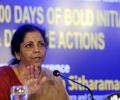
A high-level committee, including representatives from banks and payment associations, is set to decide on Merchant Discount Rate (MDR) for UPI transactions exceeding Rs 2,000 to merchants. While person-to-person and person-to-merchant transactions up to Rs 2,000 remain free, the move follows a recent amendment to the Payment and Settlement Systems Act, sparking debate and clarification from the Finance Minister that only certain high-value merchant transactions might incur charges.
The Indian government has confirmed there will be no rollback of the 0.4 per cent Merchant Discount Rate (MDR) charges on Unified Payments Interface (UPI) transactions exceeding Rs 2,000, effective from October 15. Despite opposition, officials state the decision aims to make the UPI ecosystem self-sustainable and secure, with charges applying only to merchant payments, not person-to-person transactions.
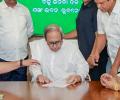
BJD chief Naveen Patnaik has voiced concerns over the Centre's decision to introduce Merchant Discount Rate (MDR) charges on UPI transactions above Rs 2,000 from October 15, urging protection for small traders and common people. This move has sparked a political debate, with the BJP defending the charges as beneficial for digital infrastructure and largely not impacting consumers, while the Congress and traders' associations criticise it as an additional burden.

Congress leader Rahul Gandhi has accused the Modi government of quietly paving the way for imposing fees on UPI transactions, alleging it's a surrender to American pressure. The government's recent notification exempts charges only up to Rs 2,000, sparking concerns that higher value transactions and eventually all UPI payments could incur fees. Finance Minister Nirmala Sitharaman, however, clarified that Merchant Discount Rate (MDR) applies to merchants, not customers, and supports digital infrastructure.

Opposition MPs have voiced strong criticism against the government's new fee on UPI payments exceeding Rs 2,000 to merchants, calling it "anti-people" and expressing widespread "outrage". The issue was raised in a Parliamentary Standing Committee meeting, where concerns were also flagged regarding the methodology of GDP growth calculation and the government's stance on Virtual Digital Assets.
The BJP has accused the Congress of spreading "fake news" regarding UPI transaction charges, asserting that the government has clarified that consumers will not be levied merchant discount rate (MDR) charges. This comes after the Congress criticised a government notification, alleging it paves the way for imposing fees on UPI transactions. The BJP has strongly refuted these claims, highlighting that most UPI transactions remain free and the government provides incentives to maintain a charge-free ecosystem for users.

The National Payments Corporation of India (NPCI) stated that the Merchant Discount Rate (MDR) "is distributed only amongst the UPI ecosystem, to further invest into infrastructure resilience, innovation, cybersecurity (protecting the UPI infrastructure with banks and non-banks) and customer service."

Finance Minister Nirmala Sitharaman clarified that the Merchant Discount Rate (MDR) on digital transactions applies to merchants, not customers, and aims to support banks and fintech in infrastructure investment. She countered Congress leader Jairam Ramesh's claims, stating that a committee will decide on MDR only after Parliament passes the Taxation and Other Laws (Amendment) Bill, 2026, a process currently stalled by parliamentary disruptions.

The government is introducing a 0.4% Merchant Discount Rate (MDR) on UPI person-to-merchant payments above Rs 2,000, effective October 15. This move ends the zero-MDR regime, aiming to fund UPI infrastructure and sustainability, as the previous government subsidy was insufficient to cover operational costs. Payments between individuals and most everyday merchant transactions will remain free.

The Indian government has introduced a 0.4% Merchant Discount Rate (MDR) on UPI person-to-merchant (P2M) transactions exceeding Rs 2,000, effective October 15. This move ends nearly six years of fully free UPI payments, though person-to-person (P2P) transfers and small P2M payments remain free. The charges aim to bolster investment in UPI infrastructure, with specific exemptions and caps for essential sectors.
The Payments Council of India has confirmed that Unified Payments Interface (UPI) services will continue to be free for consumers and small merchants, despite a recent Lok Sabha Bill. This clarification addresses concerns about potential charges, emphasising that while a sustainable financial model for UPI infrastructure is being developed, transaction charges will not be passed on to users or small businesses.

The Indian government has clarified that consumers will not be charged for UPI transactions, and most merchant transactions will also remain free. This comes amidst speculation following an amendment to the Payment and Settlement Systems Act, 2007. Any future merchant discount rate (MDR) would be nominal, threshold-based, and aimed at ensuring UPI's long-term sustainability and infrastructure development.
Parliament was informed that UPI has onboarded 55.49 crore users by June 2026, with transactions reaching 24,162 crore in volume and Rs 314 lakh crore in value in FY 2025-26. The platform, operated by NPCI, is expanding internationally through NIPL, facilitating cross-border payments and assisting other nations in building similar systems. Significant efforts are also underway by the Government, RBI, and NPCI to enhance the security and transparency of UPI transactions, including risk-based limits, security frameworks, and public awareness campaigns against cyber-crime.

Climate activist Sonam Wangchuk emphasised the enduring relevance of Mahatma Gandhi's non-violent resistance, stating, "His path is as relevant today as it was 100 years ago. This experiment is successful today."

Vande Mataram, the national song that has stirred passions and political controversies for more than a century, received legal protection on Thursday with Parliament passing a bill making any insult to it a punishable offence, rekindling the long-running debate over its place in India's history and identity.

'If there are different laws governing the same subject, it can increase the compliance burden on platforms. The process would be easier and more transparent if there were a singular national-level law.'

In terms of MLA salaries, Odisha is followed by Telangana (about Rs 2.7 lakh), Maharashtra (Rs 2.6 lakh), Manipur (Rs 2.5 lakh), and Uttar Pradesh (Rs 2.4 lakh).

In West Bengal's political circles, it was widely believed that after Mamata Banerjee, Suvendu Adhikhari was perhaps the only leader with a truly significant mass base of his own.

'Workers are the people who create all the wealth in this country. How can you call them anti-national?'

The Rajya Sabha witnessed a heated debate between the opposition and the government regarding a discussion on the West Asia crisis, with accusations of political maneuvering and failure to uphold the dignity of parliamentary positions.

Sri Lanka's response to the Easter attacks has been slow and politically contested, unlike India's swift institutional reforms after the 2008 Mumbai terror attacks, observes Colonel R Hariharan (retd).

Over the past week in Bangladesh, two Hindu men were killed in separate incidents while four people, including a priest, sustained injuries after a crude bomb went off inside a temple in the country.

Union Home Minister Amit Shah criticised the Congress party for its alleged inaction in addressing Maoist violence during its long rule, while highlighting the Modi government's success in nearly eradicating Maoists from Bastar, Chhattisgarh.

'Global uncertainty is something which definitely occupies the minds of officials when we are preparing for the Budget.'

Three laws passed in Parliament could boost central revenues, reshape GST cess flows, shift MGNREGA costs to states and create new budget headroom ahead of the 2026-2027 Union Budget, points out A K Bhattacharya.
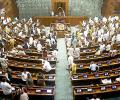
The Monsoon session of Parliament concluded after facing disruptions and protests over the revision of electoral rolls in Bihar. Despite the disruptions, the government managed to pass key legislations.

'If a charitable or religious trust sells a capital asset -- such as land, buildings, shares -- and makes a capital gain, it can avoid paying tax on that gain if it reinvests the proceeds in another capital asset for its charitable purposes.'

It was significant that the ceremony took place at 24, Akbar Road, the party's former national headquarters, and not at its new office in Kotla Road.

'There is no retrospective changing of the law, only its simplification.'

Rijiju also hit out at Congress leader Rahul Gandhi, saying that his own party MPs "get uncomfortable" when he speaks in Parliament and are apprehensive that he will do "anap-shanap baatein" and the party will have to bear the consequences.
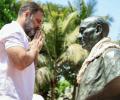
Congress leader Rahul Gandhi on Wednesday criticized the Waqf (Amendment) Act, calling it anti-constitutional and an attack on freedom of religion. He warned that the BJP-RSS will soon target the rights of other minorities, such as Christians and Sikhs. Gandhi also accused Prime Minister Narendra Modi of succumbing to pressure from US President Donald Trump on the imposition of tariffs, citing a recent meeting between the two leaders. He also questioned PM Modi's recent meeting with Bangladeshi leader Mohammad Yunus, who has been critical of India's policies. Gandhi further advocated for a caste census in India, stating that Congress aims to break the barrier of 50% reservation.

A parliamentary panel report has attributed the December 8, 2021, helicopter crash that killed India's first Chief of Defence Staff, Gen Bipin Rawat, and his wife, to "human error." The report, tabled in Parliament on Tuesday, also revealed that 34 Indian Air Force aircraft accidents occurred during the 13th Defence Plan period, including nine in 2021-22 and 11 in 2018-19.

A parliamentary panel has criticized the Indian government for withholding funds from states that have not agreed to implement the PM SHRI schools scheme, calling the reasoning behind the decision "not factual or justified." The panel has recommended the immediate release of pending funds to states like Kerala, Tamil Nadu, and West Bengal, which have been significantly impacted by the delays.

She also proposed that nine issues, including violence in Manipur and price rise, be listed for discussion during the session.
